
Why Team Ownership Matters

Product ownership is one key factor in successful steering the direction of a product. It’s the capability for a team to autonomously shape and evolve their product based on a shared agreement. This autonomy, however, isn’t without responsibility; it demands accountability for the product’s trajectory and necessitates the use of methods and tools to forecast its future.

Product ownership in Agile methodologies offers a distinctive advantage – the ability to respond swiftly to change. Short feedback cycles empower teams to make informed decisions based on real-time data. This adaptability is crucial in a dynamic market where customer preferences and industry trends can shift rapidly. By minimizing external influence, teams gain the autonomy to collaboratively shape the product, aligning development efforts with Agile principles of flexibility and responsiveness.

Yet, autonomy in product ownership is a shared responsibility between the team and management. Agile coaches play a pivotal role in fostering the team’s willingness and capabilities to take ownership. Through coaching, they emphasize the intrinsic value derived from responsibility and accountability. Simultaneously, for autonomy to thrive, management must actively recognize and support the team’s ownership. Without such support, teams risk being relegated to mere executors of features rather than architects of innovative products. True empowerment emerges when the team’s autonomy is not just tolerated but actively supported, creating a culture of belief in the product throughout the organization.
Within Agile teams, a diverse mix of backgrounds, including software developers and those with product and customer experience, often prevails. However, the challenge lies in transitioning from a role focused on coding and feature implementation to actively deciding the product’s future. It’s not merely about coding proficiency; it’s about acquiring a holistic understanding of customers, market dynamics, competitors, and viable monetization strategies. The challenge is in broadening the team’s expertise beyond technical domains to encompass the intricacies of product strategy and market positioning.

In the traditional Agile landscape, product owners often hold sway in deciding the next feature. However, the full potential of an Agile team is unleashed when product owners consider the unique knowledge, skills, and time constraints of each team member. Agile product owners and coaches create an environment where developers are encouraged to take ownership. This collaborative approach is not just theoretical; it is actively communicated through various channels, such as speeches, blog posts, and daily interactions. Agile leadership finds its manifestation in routine Agile meetings like Scrum Daily and Scrum Refinement, providing platforms for inclusive decision-making and shared ownership.

While I think the advocated approach of seamless collaboration in decision-making and taking ownership as the 100% right way, I acknowledge the rarity of encountering this ideal scenario. It is my persuasive call to action. I urge readers, to explore and implement this approach within their teams and organizations. The emphasis lies on the potential benefits in product success and team satisfaction. While the ideal may be aspirational, the pursuit of enhanced ownership and collaboration promises tangible improvements in product outcomes and team dynamics.

Company benefits

When teams wholeheartedly embrace ownership of a product, companies stand to reap a myriad of benefits that extend far beyond the development phase. The alignment of the team’s collective focus with the success of the product becomes a catalyst for overall organizational growth. Here are some notable advantages:

Increased Accountability:

Teams taking ownership foster a culture of accountability. Each team member becomes more invested in the product’s success, leading to a heightened sense of responsibility for delivering high-quality results.

Enhanced Product Quality:

Ownership often translates to a deeper understanding of the product and its intricacies. Teams, when empowered, are more likely to strive for excellence, resulting in a product of higher quality that aligns closely with user needs.

Innovative Problem Solving:

An empowered team is more likely to approach challenges proactively. With ownership comes a sense of empowerment that encourages innovative problem-solving, enabling teams to navigate hurdles creatively and efficiently.

Improved Communication and Collaboration

Ownership fosters a collaborative environment where team members communicate effectively. Shared responsibility encourages open dialogue, leading to improved collaboration, knowledge sharing, and a more cohesive team dynamic.

Adaptability to Change

Teams with ownership are inherently more adaptable. The agile nature of product ownership allows for quick adjustments based on market changes or user feedback, ensuring the product remains relevant and competitive.

Efficient Decision-Making

With ownership, decision-making becomes more streamlined. Empowered teams can make decisions efficiently, avoiding unnecessary bureaucracy and delays. This agility is crucial in rapidly evolving markets.

Employee Satisfaction and Retention

Ownership over a product creates a sense of pride and accomplishment among team members. This increased job satisfaction contributes to higher employee retention rates, reducing the costs and challenges associated with employee turnover.

Customer-Centric Approach

Teams that take ownership inherently adopt a customer-centric mindset. They are more likely to empathize with users, resulting in products that genuinely address customer needs and preferences.

Faster Time-to-Market

Ownership accelerates the development process. Teams, empowered to make decisions, can respond promptly to market demands, ensuring faster time-to-market for new features or product releases.

Long-Term Product Vision

Teams with ownership are better positioned to contribute to the long-term vision of the product. Their understanding of user needs and market dynamics enables them to align development efforts with the broader strategic goals of the company.

In essence, a team that takes ownership of a product becomes a driving force for the company’s success. The synergy between individual commitment and organizational objectives creates a positive feedback loop, fostering an environment where innovation, collaboration, and adaptability thrive. The investment in empowering teams to take ownership pays dividends not only in the quality of the product but also in the sustained growth and resilience of the entire company.

Skills, Methods and Tools

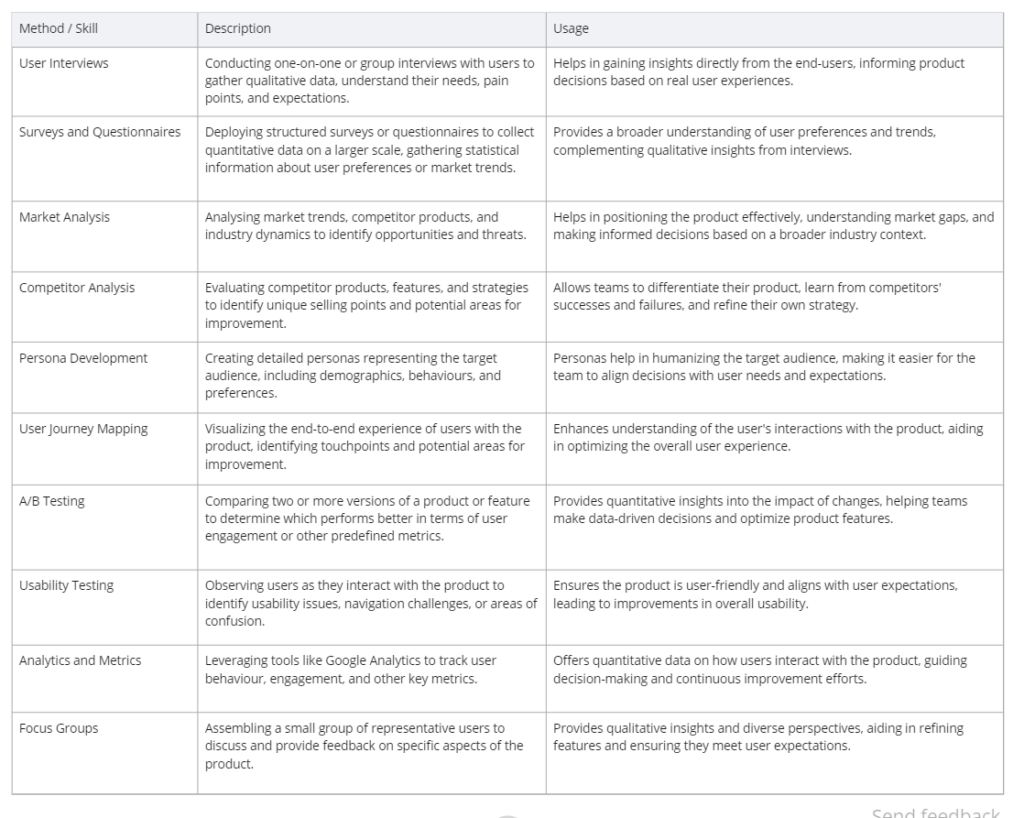
Mastering a comprehensive set of skills, employing effective methods, and utilizing the right tools are paramount for success. A successful product ownership journey requires a strategic blend of technical proficiency, collaborative skills, and a toolbox equipped with methodologies tailored to understand user needs and market dynamics. In the following section, we delve into a curated list of skills, methods, and tools essential for teams aspiring to fulfil ownership of their products. These elements collectively empower teams to navigate challenges, make informed decisions, and drive product success in today’s competitive and ever-evolving market.
The journey towards product success is intricately tied to the ethos of team ownership. As we’ve explored the skills, methods, and tools that empower teams, it becomes evident that the benefits extend well beyond the realm of project completion. A culture of ownership not only enhances product quality, innovation, and adaptability but also contributes to a harmonious and motivated team dynamic. As we embrace the principles of agility and collaboration, let us recognize that true success lies in the hands of those who take ownership, driving excellence, and steering organizations towards sustained growth. Through collective empowerment, teams become architects of their own success, shaping a future where product triumphs are synonymous with the unwavering commitment of those who truly own their endeavors.

Quality Assurance vs. Quality Control in Scrum

Quality in software development is not just a nice-to-have; it is a fundamental pillar that underpins the success and reputation of any software endeavour. From ensuring customer satisfaction and loyalty to reducing costly defects and maintenance efforts, the pursuit of quality remains a core objective for every software development team.

In pursuit of this goal, two crucial approaches come into play—Quality Assurance (QA) and Quality Control (QC). Although often used interchangeably, they represent distinct aspects in achieving the common objective of excellence in software development. In this blog post, we will explore the differences between QA and QC in the context of Scrum and shed light on how they complement each other in creating exceptional software products.

Quality Assurance (QA) in Scrum

Quality Assurance in Scrum revolves around prevention-focused activities. It aims to embed quality into the development process from the very beginning. QA starts during the early stages of product development and continues throughout the project’s lifecycle. Here are some key characteristics of QA in Scrum

  • Defining and adhering to standards: QA establishes clear and agreed-upon standards for development, testing, and documentation. These standards serve as guidelines that the team follows to ensure consistency and quality.
  • Process improvement: QA involves continuous process improvement efforts to identify inefficiencies, bottlenecks, and potential areas of improvement in the development process. Regular retrospectives play a vital role in this aspect.
  • Training and skill development: QA emphasizes skill development and training for team members to enhance their abilities and ensure they possess the necessary expertise to deliver high-quality products.
  • Early defect prevention: QA activities focus on identifying and addressing potential defects as early as possible in the development lifecycle. This helps in avoiding costly rework and increases overall productivity.

QA can be summarized as Process-Oriented, Prevention over Detection and Documentation and Training.

While the primary focus of the Scrum Master is to facilitate the Scrum process and remove impediments, they also contribute significantly to the overall quality of the software product through their involvement in process improvement and fostering a culture of continuous improvement. Here’s how the Scrum Master plays a role in quality assurance. The Scrum Master encourages the team to adopt a quality-centric mindset. They promote the understanding that quality is everyone’s responsibility and not just the concern of the Quality Assurance or Testing team. The Scrum Master emphasizes that delivering high-quality software is crucial for long-term success.

The scrum masters involvement in retrospectives, advocating for Definition of Done, and removing impediments contributes to the overall quality of the software product and the team’s ability to continuously deliver value to customers.

Quality Control (QC) in Scrum

Quality Control in Scrum, on the other hand, centres around detection-focused activities. It involves verifying that the deliverables meet the predefined standards and requirements. QC activities occur at various stages of the development process, with the primary goal of identifying and fixing defects. Here are some key aspects of QC in Scrum:

  • Testing and validation: QC encompasses various testing practices, including functional testing, integration testing, regression testing, and user acceptance testing. These tests are designed to verify that the product meets the desired functionality and quality standards.
  • Defect identification and management: QC involves actively searching for defects, tracking them, and collaborating with the development team to resolve issues promptly.
  • Review processes: Peer reviews, code reviews, and design reviews are part of QC efforts to ensure that the developed product aligns with the established quality criteria.

QC can be summarized as product-oriented, defect identification and correction as well as validation and verification.

Es wurde kein Alt-Text für dieses Bild angegeben.

Balancing QA and QC in Scrum

Both Quality Assurance and Quality Control are integral to maintaining a high standard of software quality. To achieve software excellence in a Scrum environment, it’s essential to strike the right balance between these two approaches.

QA and QC should be viewed as complementary rather than competing forces. Implementing robust QA practices reduces the likelihood of defects, thereby reducing the amount of time and effort spent on QC activities. Conversely, effective QC practices provide valuable feedback to the development team and contribute to continuous improvement efforts in QA.

Establish valuable QA and QC

Actions for Valuable Quality Assurance (QA)

  • Define Clear Quality Standards: Establish and document clear quality standards, including coding guidelines, design principles, and testing criteria. This ensures that everyone on the team understands and follows a common set of quality guidelines.
  • Implement Code Reviews: Encourage regular code reviews among team members to promote collaboration and identify potential issues early in the development process. Code reviews help catch bugs, improve code readability, and maintain consistent coding practices.
  • Conduct Regular Knowledge Sharing Sessions: Organize knowledge sharing sessions where team members can present best practices, lessons learned, and new techniques. This fosters a culture of continuous learning and ensures that the team stays updated on the latest developments in the industry.
  • Invest in Test Automation: Develop and maintain a suite of automated tests, including unit tests, integration tests, and end-to-end tests. Test automation improves test coverage, identifies regressions, and allows faster feedback on code changes.
  • Prioritize Test-Driven Development (TDD): Encourage the adoption of Test-Driven Development, where developers write tests before implementing the code. TDD helps in focusing on requirements and ensures that test cases are closely tied to the desired functionality.
  • Implement Continuous Integration and Continuous Deployment (CI/CD): Implement CI/CD pipelines to automatically build, test, and deploy code changes. This minimizes integration issues and accelerates the delivery of features to end-users.

Actions for Valuable Quality Control (QC)

  • Perform Comprehensive Testing: Conduct various testing activities such as functional testing, regression testing, performance testing, security testing, and user acceptance testing. Rigorous testing helps identify defects and ensures that the software meets user requirements.
  • Track and Manage Defects: Use a robust defect tracking system to document and manage identified issues. Prioritize defects based on their severity and impact, and ensure timely resolution.
  • Implement Exploratory Testing: Encourage exploratory testing, where testers explore the software with an open mindset to discover hidden defects and usability issues that might not be covered by scripted tests.
  • Engage in Bug Bashes or Bug Hunts: Organize bug bashes or bug hunts where the entire team collaboratively tests the software to find as many defects as possible within a specific timeframe. This can help identify critical issues and foster a sense of shared responsibility for quality.
  • Conduct Root Cause Analysis (RCA): Whenever a significant defect is discovered, perform a root cause analysis to understand the underlying reasons for the issue. Use the findings to prevent similar issues from recurring in the future.
  • Encourage User Feedback: Gather user feedback through surveys, user interviews, or usability testing. User feedback provides valuable insights into the software’s usability, functionality, and overall quality.
  • Incorporate Test Environment Management: Maintain well-configured and consistent test environments to ensure that testing accurately represents the production environment and avoids discrepancies.

In the context of Quality Control (QC) activities, the Scrum Master plays a critical role in facilitating and supporting the team’s efforts to ensure product quality. While the primary responsibility for QC lies with the Development Team, the Scrum Master helps create an environment conducive to effective QC practices and collaborates with the team to address any impediments that may hinder the quality control process.